Starting a home daycare and wondering which toys are actually worth buying?
It is easy to spend a lot of money filling shelves with toys that look exciting but rarely get used. After more than 15 years of running a home daycare and over 20 years of working with toddlers and preschoolers, I have found that the best toys for home daycare are usually the simplest ones.
They are durable, easy to clean, appropriate for more than one age group, and open-ended enough to be used in many different ways.
You do not need a playroom overflowing with toys to create an engaging daycare environment. A smaller collection of carefully chosen toys will often keep children more interested and make cleanup and organization easier.
Post updated August 2026. Contains affiliate links.
What Toys Do You Need to Start a Home Daycare?
If you are working with a limited budget, begin with these five categories:
- Blocks or another building toy
- Basic dramatic-play materials
- Dolls and toy people
- Vehicles or animals
- Books
Add balls, puzzles, art materials, sensory supplies, and outdoor toys as your enrollment and budget grow.
The toys you choose should also match the ages and abilities of the children currently enrolled. You do not need to buy infant toys if you are only caring for preschoolers, and you should avoid small pieces if infants or young toddlers share the play area.
What Makes a Toy Good for Home Daycare?
A toy that works well in group care needs to do more than entertain one child for a few minutes. Before buying something, I consider whether it is:
- Durable enough for daily use
- Easy to wash or wipe clean
- Safe for the ages in my care
- Interesting to more than one age group
- Simple enough for children to use independently
- Open-ended, with more than one way to play
- Easy to store without dozens of loose pieces
- Useful with toys I already own
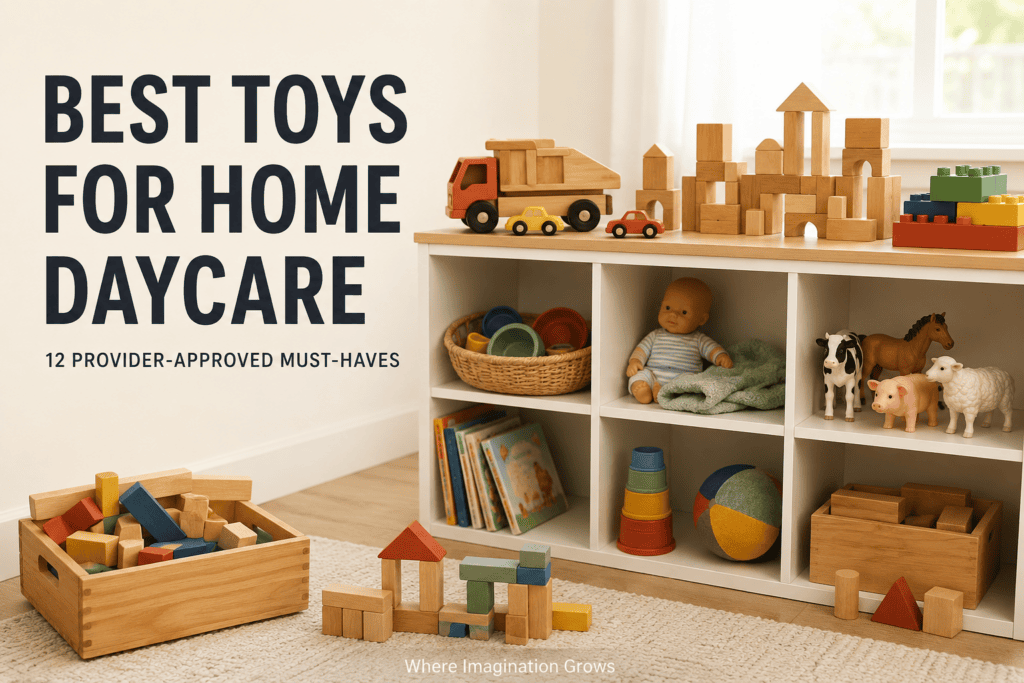
Open-ended toys are especially valuable because children can use them differently every time they play. Blocks can become a road, house, zoo, castle, or restaurant. Toy animals can be used with blocks, playdough, sensory bins, and dramatic-play activities.
That kind of flexibility gives you much more value for your money.
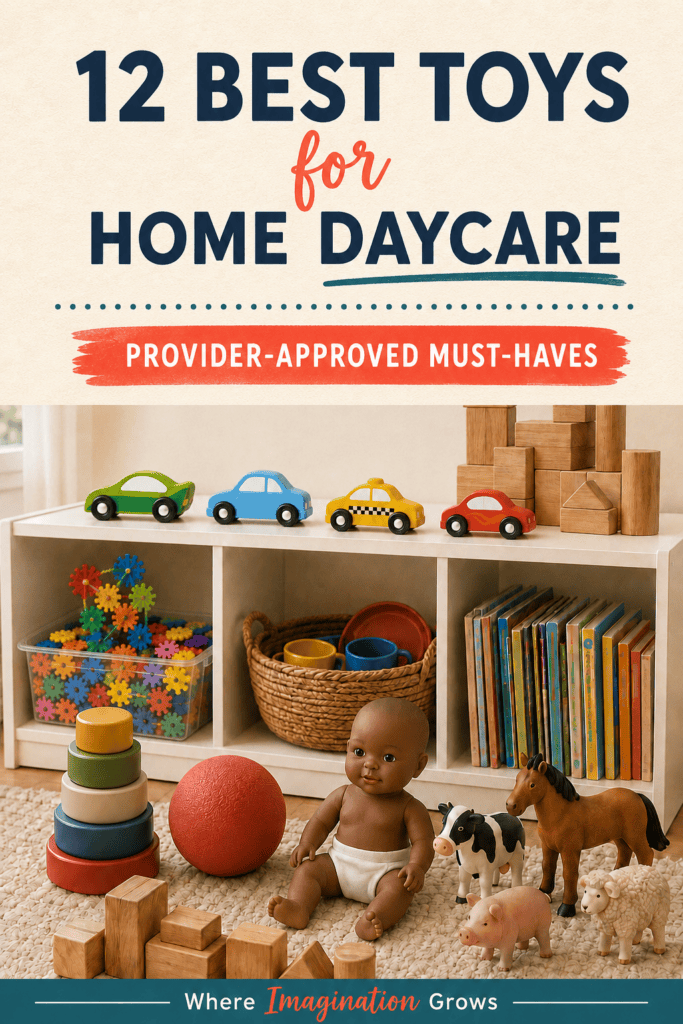
1. Blocks and Building Toys
If I could recommend only one type of toy for a new home daycare, it would be blocks.
A good block collection grows with children. Younger toddlers may stack, carry, and knock blocks down, while preschoolers use the same materials to create detailed buildings, roads, and pretend-play settings.
Good choices include:
- Wooden unit blocks
- Chunky wooden blocks
- LEGO DUPLO bricks
- Large interlocking building pieces
- Magnetic building tiles that are intact and appropriate for the children’s ages
You do not need several building sets when you first open. Start with one sturdy set and add more pieces later if it becomes a favorite.
Blocks also work well with toy people, animals, and vehicles, which makes all of those toys more engaging.
2. Dramatic-Play Toys
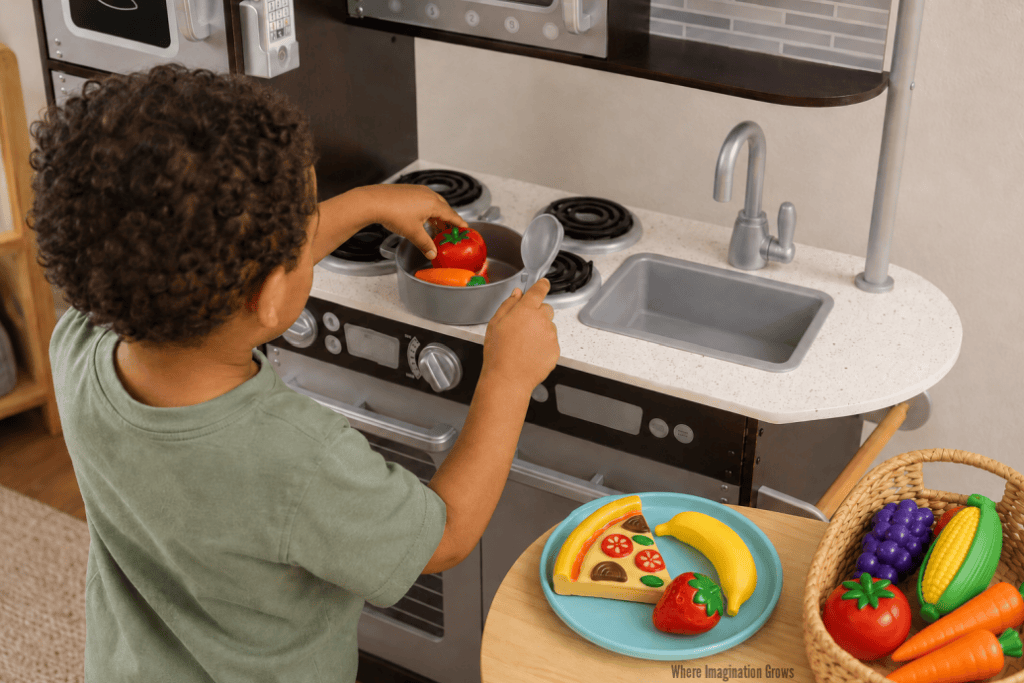
Pretend play is a daily favorite in most home daycare programs. It encourages language, cooperation, problem-solving, and imaginative play.
A large, elaborate play kitchen is not required. You can begin with:
- A small pretend kitchen or low shelf
- Toy dishes and cups
- A few pots, pans, and utensils
- Durable pretend food
- A basket or reusable shopping bag
- A toy phone
- Scarves, hats, purses, and simple dress-up items
Choose dramatic-play materials that reflect familiar experiences. Children love pretending to cook meals, shop for groceries, care for babies, go to work, or run a restaurant.
Scarves and hats are usually more versatile than complete character costumes, and they take up much less storage space.
3. Dolls and Toy People
Simple baby dolls are worth having in every home daycare. Children use dolls to imitate caregiving routines, practice empathy, and act out familiar experiences.
Look for dolls that are:
- Durable and washable (I’ve had this doll set for 12+ years)
- Easy for young children to carry
- Free from complicated electronic features
- Representative of different skin tones and backgrounds
You do not need a large collection of accessories. A small basket, blanket, bottle, and a few pieces of doll clothing are enough to encourage meaningful play.
Small toy people are another useful addition. They can be used in dollhouses, block structures, sensory bins, and pretend-play scenes. For mixed-age groups, choose figures that are large enough not to present a choking hazard.
4. Cars, Trucks, and Other Vehicles
Toy vehicles appeal to a wide range of ages and interests. They can be used independently or combined with blocks, ramps, roads, cardboard boxes, and sensory materials.
A basic vehicle collection might include:
- Cars
- Construction trucks
- A bus
- An emergency vehicle
- A tractor
- A larger push vehicle for toddlers
I prefer simple vehicles without batteries, flashing lights, or lots of tiny detachable parts. Basic wooden or sturdy plastic vehicles generally last longer and allow children to create their own sound effects and stories.
5. Toy Animals
Plastic animals are some of the most frequently used toys in my daycare.
Children use them in block play, playdough, sensory bins, small-world activities, science discussions, and dramatic play. A small collection can support many different preschool themes throughout the year.
Start with one or two sets, such as:
- Farm animals
- Zoo animals
- Woodland animals
- Dinosaurs
- Ocean animals
Choose sturdy animals that are easy to wash. Jumbo animals are especially useful when infants and young toddlers share the space.
6. Puzzles and Fine-Motor Toys
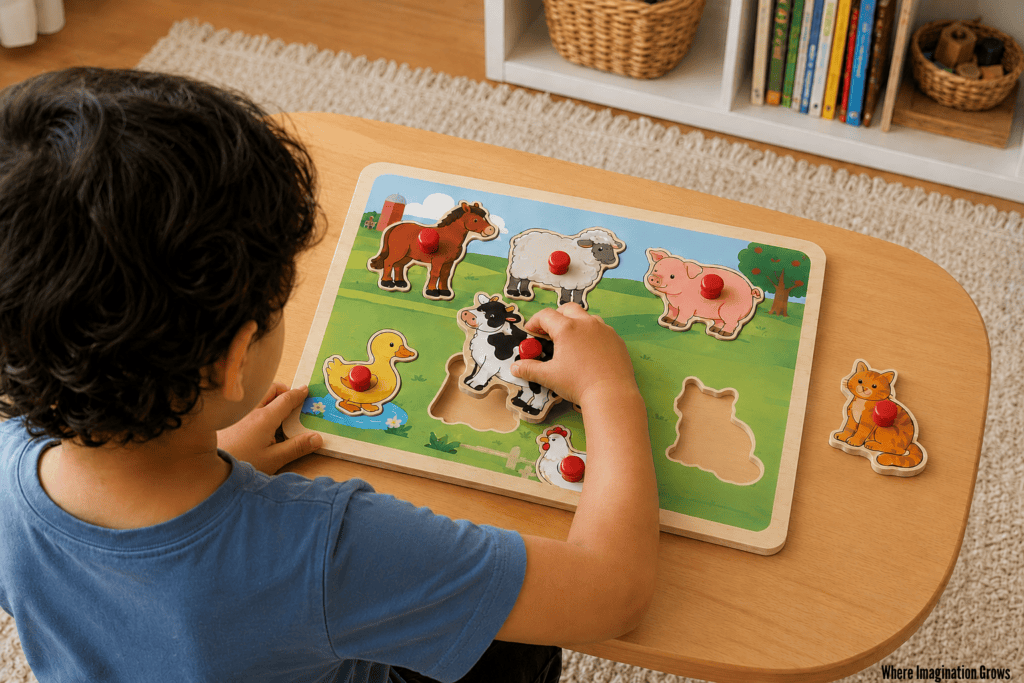
Puzzles and manipulatives give children opportunities to work on hand-eye coordination, problem-solving, matching, and persistence.
Useful options include:
- Wooden knob puzzles
- Simple inset puzzles
- Peg boards
- Stacking cups
- Shape sorters
- Nesting toys
- Large lacing beads for older children
- Interlocking gears or other building manipulatives
You do not need to place every puzzle on the shelf at once. Rotating a few at a time makes them easier to manage and keeps children interested.
Remember that materials with small pieces should be stored separately when younger children are present.
7. Balls and Gross-Motor Toys
Balls are inexpensive, versatile, and useful for encouraging active play.
Start with a few different sizes and textures. Soft playground balls, sensory balls, and lightweight inflatable balls can be used for rolling, tossing, kicking, chasing, and simple group games.
You can also add:
- Beanbags
- Plastic cones
- Hula hoops
- Stepping stones
- A small indoor tunnel
Gross-motor toys are especially helpful on rainy days when outdoor play is limited.
8. Basic Art Materials
Art materials are not technically toys, but they are essential in my home daycare and provide some of the best open-ended play opportunities.
A basic art collection should include:
- Washable crayons
- Washable markers
- Construction paper
- White drawing paper
- Washable paint
- Paintbrushes for Kids
- Glue sticks
- Child-safe scissors
- Playdough
Back-to-school sales are one of the best times to stock up on crayons, markers, scissors, glue, and paper! I buy in bulk during back-to-school sales.
Keep the initial collection simple. You can add specialty craft supplies when you need them instead of purchasing a large assortment all at once.
9. Playdough and Sensory-Play Materials
Playdough is one of the most versatile and affordable materials you can offer. It supports fine-motor development, creativity, pretend play, and early math skills.
Add simple tools such as:
- Rolling pins
- Plastic cutters
- Child-safe scissors
- Small cups
- Craft sticks
- Stamps
Sensory bins are another option, but you do not need a separate bin for every theme. One durable container can be reused with different fillers and accessories.
Always choose sensory materials based on the ages and developmental needs of the children in your care and supervise them appropriately.
10. Books
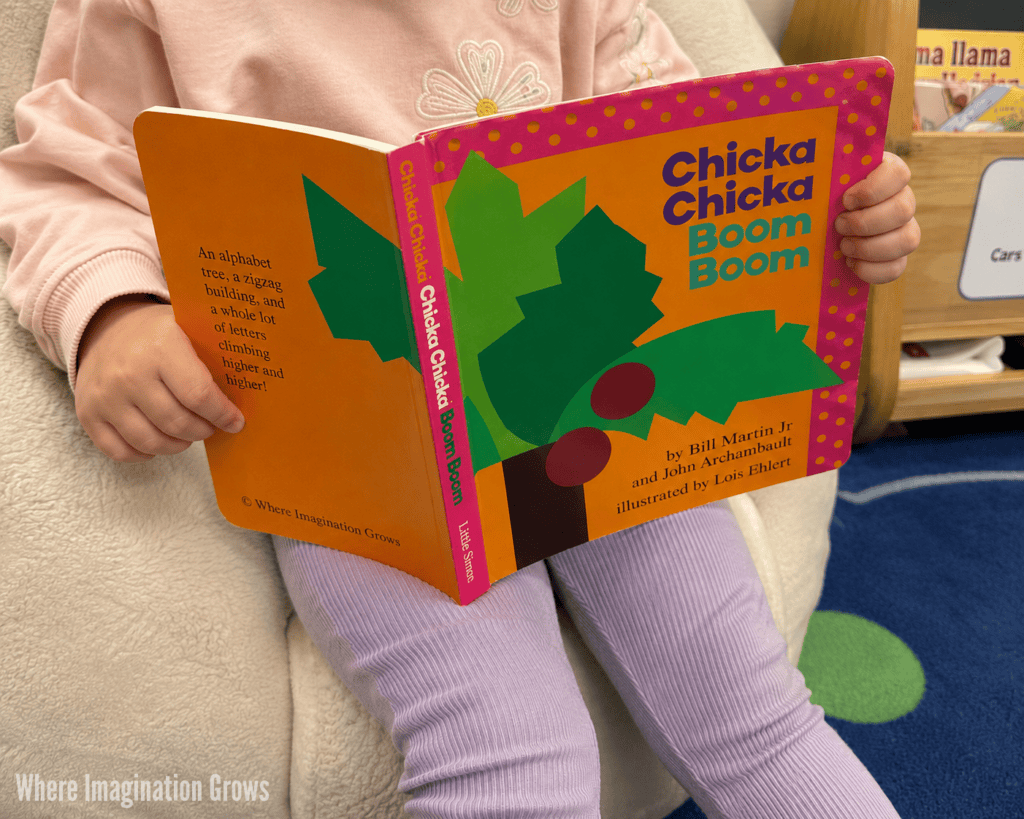
Books are an absolute home daycare must-have.
Include a mixture of:
- Durable board books
- Picture books
- Rhyming books
- Simple nonfiction
- Books about emotions and everyday routines
- Books showing diverse families, cultures, and abilities
- Seasonal and thematic books
You can create an inviting reading area with a small rug, basket of books, and a couple of washable pillows.
Libraries, used-book stores, garage sales, and library book sales are excellent places to build your collection without spending a lot. Check used books carefully for torn pages, writing, mold, and other damage.
11. Music and Movement Materials
Music and movement activities are useful for circle time, transitions, indoor gross-motor play, and those moments when everyone needs a change of pace.
You might include:
- Egg shakers
- Rhythm sticks
- Scarves
- Hand drums
- Jingle bells secured to handles
- A child-safe music player or speaker
You do not need a complete classroom instrument set. A basket with a few simple rhythm instruments and scarves is enough to get started.
12. Outdoor Toys
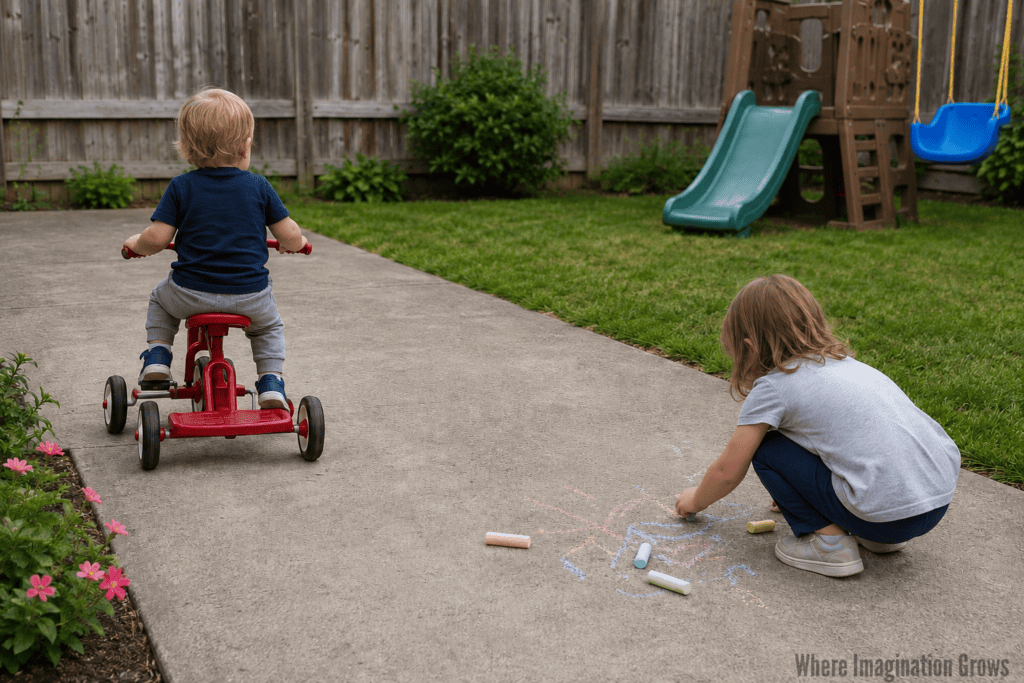
Outdoor toys do not have to be elaborate. In fact, simple outdoor materials often get the most use.
Consider starting with:
- Balls
- Sidewalk chalk
- Bubbles
- Buckets and scoops
- Toy trucks
- Water-play containers
- Push toys
- Ride-on toys appropriate for the children’s ages
Choose items that are easy to store and work well in your available outdoor space. Always check your licensing requirements before purchasing climbing equipment, large play structures, or other permanent outdoor equipment.
Toys I Would Not Buy Right Away
When starting a home daycare, I would avoid spending too much money on:
- Large electronic toys with only one purpose
- Toys with lots of easily lost pieces
- Huge themed playsets
- Too many stuffed animals
- Multiple versions of the same toy
- Toys that are difficult to clean
- Trendy toys that only interest one child
- Materials that are inappropriate for your youngest age group
- Expensive sensory tables
- Large outdoor play equipment
You can always add specialty toys later. Begin with toys that work for several children, ages, themes, and types of play.
Buying Used Toys for Home Daycare
Secondhand toys can save a new provider hundreds of dollars. Check:
- Children’s resale stores
- Garage and estate sales
- Local Buy Nothing groups
- Facebook Marketplace
- Thrift stores
- Retiring daycare providers
- Friends and family
Before using a secondhand toy, inspect it carefully. Make sure it is sturdy, complete, washable, and free from cracks, sharp edges, peeling paint, exposed batteries, loose magnets, or missing pieces.
Check the CPSC recall database before purchasing or using unfamiliar secondhand equipment or toys. The CPSC also recommends following the manufacturer’s age guidance and keeping toys with small parts away from children under age three.
Licensing rules may restrict certain toys or require specific cleaning and safety procedures, so always check the regulations for your state.
How to Keep Daycare Toys Interesting
You do not need to leave every toy available all the time.
I recommend keeping your most versatile toys—such as blocks, dolls, vehicles, animals, books, and dramatic-play materials—available regularly. Rotate puzzles, specialty manipulatives, sensory materials, and themed toys.
Toy rotation can:
- Reduce clutter
- Make cleanup easier
- Renew children’s interest
- Help you see which toys are actually being used
- Prevent shelves from becoming overwhelming
Store toys in clearly labeled bins and group similar materials together. Avoid filling bins to the top; children are more likely to play when they can easily see and access what is available.
Frequently Asked Questions About Home Daycare Toys
How many toys do I need to start a home daycare?
There is no perfect number. Start with a small selection from several play categories rather than buying large quantities of one type. You can add toys once you know the ages, interests, and needs of the children enrolled.
What toys are best for a mixed-age home daycare?
Blocks, large vehicles, sturdy animals, dolls, dramatic-play materials, balls, books, and basic art supplies work especially well with mixed ages. Select pieces that are safe for the youngest child who can access them.
Are expensive educational toys necessary?
No. A toy does not need flashing lights, a screen, or an “educational” label to support learning. Simple, open-ended toys allow children to practice language, creativity, cooperation, fine-motor skills, and problem-solving through play.
How often should daycare toys be rotated?
There is no required schedule. Rotate toys when children lose interest, the shelves become cluttered, or you introduce a new theme. Some providers rotate items weekly, while others change only a few materials at a time.
What should I buy first if my budget is small?
Begin with blocks, dramatic-play materials, dolls or people, a few vehicles or animals, balls, and books. Purchase additional materials once you know what the children in your program enjoy most.
Start Small and Choose Toys That Last
You do not have to create a fully stocked preschool classroom before your first day.
Start with durable, versatile toys that fit your current group, your available space, and your budget. Add new items gradually and pay attention to what the children return to again and again.
In my experience, the simplest toys usually become the most loved—and they are often the ones that last the longest.
If you are preparing to open your program, read my must-have supplies for home daycare providers next. You can also visit my How to Start a Home Daycare resource page for more tips about setting up and running your program.
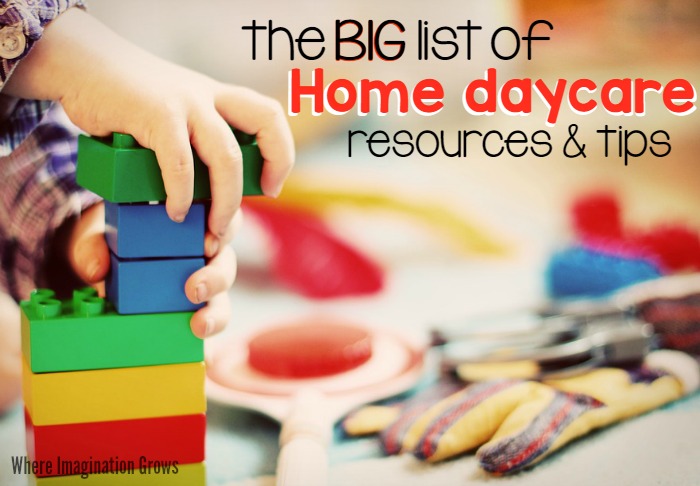
I highly recommend magnatiles. They keep our young children from ages 2 to 6 engaged as they are able to utilize them however their imagination guides them.