Updated October 2026
Starting a home daycare can be rewarding, but it can also feel overwhelming. Caring for children is only one part of the job. You are also responsible for licensing, contracts, policies, expenses, meals, cleaning, parent communication, recordkeeping, and all the daily decisions that come with running a small business.
This home daycare resource center brings together my most helpful information about starting, organizing, and successfully running a family child care program. You will find practical advice about setting up your business, creating contracts, interviewing families, managing your daily routine, handling difficult situations, and preventing provider burnout.
Advice from an experienced home daycare provider: I have operated a licensed home daycare for more than 18 years and have over 20 years of experience working with preschoolers in home daycare, preschool, and classroom settings. These resources are based on the lessons I have learned from running a real home daycare and working directly with children and families.
Whether you are thinking about opening a daycare in your home or already operate a family child care program, use this page as your starting point for home daycare information, tips, and provider resources.
Home Daycare Resources
On this page, you will find information about:
- Deciding whether home daycare is right for you
- Understanding licensing and business requirements
- Creating a home daycare contract and policies
- Interviewing and enrolling families
- Setting up your home daycare space
- Planning schedules, meals, naps, and cleaning
- Managing daycare parents and difficult situations
- Preventing home daycare provider burnout
- Finding home daycare contracts, forms, and other resources
How to Start a Home Daycare in 7 Steps
Although every home daycare is different, most new providers will need to complete these basic steps:
- Decide whether running a home daycare is right for you and your family.
- Research your state and local child care licensing requirements.
- Make sure your home can safely accommodate a child care program.
- Estimate your expenses, potential income, and tuition rates.
- Create a detailed home daycare contract and policy handbook.
- Prepare your child care space, supplies, schedule, meals, and routines.
- Advertise your openings and carefully interview potential families.
You do not need to have every detail figured out immediately. Start with licensing and safety requirements, and then build the policies and routines that will help your program operate successfully.
Home daycare licensing requirements vary by state and may also depend on your county or city. Some areas require a license even when you care for only a small number of unrelated children. Before accepting children or purchasing expensive equipment, contact your local licensing agency and review the child care licensing information available through ChildCare.gov.
Is Starting a Home Daycare Right for You?
Running a daycare from your home can allow you to work with children, earn an income, stay home with your own children, and create a program that reflects your values.
However, it can also mean long days, unpredictable income, less privacy, constant cleaning, difficult parent conversations, and very little separation between your job and your home life.
These resources can help you make an informed decision before opening your program.
15 Pros and Cons of Starting a Home Daycare
Explore the honest benefits and challenges of running a daycare from your home. This guide covers income, flexibility, long working hours, privacy, enrollment changes, family life, and the many different responsibilities providers manage.
Things I Wish I Knew Before Starting a Home Daycare
There are many parts of home daycare that new providers do not anticipate. Learn why payment policies, contracts, time off, professional boundaries, and clear expectations are important from the beginning.
8 Truths About Home Daycare From a Provider
Home daycare is a real profession and a real business. These truths address some of the common misconceptions providers encounter and explain what running an in-home child care program is really like.
Is Your House Right for Running a Home Daycare?
Not every house needs a separate daycare room, but the layout of your home will affect how easily you can supervise children, serve meals, manage naps, store supplies, and separate your work from family life.
Home Daycare Providers vs. Babysitters
A professional home daycare provider is not simply a babysitter. Learn about the differences in responsibilities, expectations, scheduling, policies, and the professional role of a family child care provider.
Plan the Business Side of Your Home Daycare
A home daycare may operate from your house, but it still needs to be treated like a business.
Before enrolling families, think carefully about your hours, rates, expenses, payment policies, planned closures, enrollment needs, insurance, recordkeeping, and taxes. Establishing clear business practices from the beginning can prevent many future problems.
Research Licensing and Local Requirements
Licensing requirements may determine:
- How many children you may care for
- Whether your own children count toward your capacity
- Which ages you can enroll
- Required provider training
- Background-check requirements
- Indoor and outdoor safety standards
- Meal and food-handling requirements
- Safe-sleep practices
- Emergency plans
- Required records and forms
Always check with your state or local child care licensing agency. Do not rely only on information from social media groups because licensing requirements can differ significantly by location.
Create a Realistic Home Daycare Budget
Before setting your tuition rates, estimate both your startup and ongoing expenses.
Tuition is your business revenue, not your take-home pay. Your rates need to cover your operating expenses, taxes, unpaid administrative work, and the income you need to earn.
Home Daycare Tax Deductions for Child Care Providers
Family child care providers may be able to deduct eligible business expenses related to their home, food, toys, supplies, cleaning, furniture, training, and other operating costs. Learn which expenses you may need to track and discuss with a qualified tax professional.
Advertising Tips for Home Daycare Providers
Empty spaces can quickly affect your income. Find practical ways to advertise your home daycare, connect with local families, and clearly communicate what makes your program a good fit.
Create Your Home Daycare Contract and Policies
A detailed contract is one of the most important tools you can have as a home daycare provider. Policies are much easier to enforce when families have read and signed them before care begins.
Tips for Creating a Home Daycare Contract
Learn which policies should be included in a home daycare contract and why clear written expectations protect both the provider and the families using the program.
Paid Time Off for Home Daycare Providers
Home daycare providers do not receive vacation days or benefits from an employer. Learn how paid time off can be included in your contract and communicated professionally to daycare families.
How to Handle an Illness Outbreak in Your Home Daycare
Illnesses can spread quickly through a group of young children. Find practical steps for communicating with parents, reviewing illness policies, cleaning your space, and deciding when children should remain home.
Interview and Enroll Daycare Families
Not every available family will be the right family for your program. A successful daycare relationship depends on more than just if you have an opening and the family needs care. Your hours, policies, communication styles, expectations, and approach to child care should also be compatible.
Use your interview to learn about the child and family while giving parents an accurate picture of your program.
Tips for Interviewing Daycare Clients
Learn how to prepare for daycare interviews, present your program professionally, discuss important policies, and identify whether a family may be a good fit.
Interview Questions Daycare Providers Should Ask
Use these questions to learn about a child’s schedule, temperament, previous child care experiences, eating and sleeping habits, family expectations, and potential care needs.
What Do Parents Expect From Daycare?
Understanding reasonable parent expectations can help you improve communication and provide dependable care without allowing families to disregard your policies or professional boundaries.

Set Up Your Home Daycare Space
A home daycare does not need to look like a large child care center. It should be safe, manageable, welcoming, and appropriate for the ages you plan to serve.
Choose durable materials that can be used in multiple ways rather than filling your home with complicated toys. Think about supervision, storage, meals, bathroom access, diaper changes, naps, outdoor play, and how the space will function after daycare hours.
The Best Toys for Home Daycare
Discover versatile toys that encourage open-ended play and work well for different ages. These are the types of toys children return to again and again.
Must-Have Household Items for Running a Home Daycare
Some of the most useful daycare supplies are ordinary household items. Find practical tools that can make meals, cleaning, organization, diaper changes, and daily routines easier.
Kid-Friendly Bathroom Hacks for Home Daycare
Make a regular household bathroom easier for young children to use while keeping supplies organized and maintaining a space that still works for your family.
15 Fun Books Every Daycare Needs
Build a useful daycare book collection with stories that work well for group reading, transitions, quiet time, and repeated requests from young children.
Create Manageable Home Daycare Routines
Home daycare often involves caring for infants, toddlers, and preschoolers simultaneously. A predictable routine can help children feel secure while making the day easier for you to manage.
A home daycare schedule should provide structure without being so rigid that one late arrival or missed nap disrupts the entire day.
Home Daycare Daily Schedule for Mixed Ages
See a realistic sample schedule for a mixed-age home daycare, including meals, activities, outdoor play, naps, transitions, and pickup time.
Naptime Tips for Home Daycare Providers
Getting several children to rest at the same time is not always easy. These tips can help you establish consistent expectations and create a calmer naptime routine.
Free 12-Week Sample Home Daycare Lunch Menus
Save time planning meals with 12 weeks of simple, child-friendly lunch menus created for home daycare programs.
Ultimate Home Daycare Cleaning Checklist
Use this free printable checklist to organize daily, weekly, monthly, and seasonal cleaning tasks without feeling as though you need to deep-clean your entire daycare every day.
Manage Daycare Parents and Difficult Situations
Most daycare families are wonderful, but difficult conversations are an unavoidable part of running a child care business. At some point, you may need to address a late payment, repeated late pickups, illness-policy violations, disrespectful messages, behavior concerns, or a family that is no longer a good fit.
Clear policies and calm, professional communication can prevent many problems from becoming larger conflicts.
Social Media Etiquette for Home Daycare Providers
Social media can be helpful for promoting your business and connecting with other providers, but it can also create privacy and professionalism concerns. Learn what home daycare providers should consider before posting online.
Tips for Dealing With Angry Daycare Clients
Find practical advice for remaining professional, referring families back to your policies, documenting conversations, and responding to a parent who is angry or confrontational.
Tips for Terminating a Daycare Client
Sometimes ending care is the healthiest decision for your program. Learn when termination may be necessary and how to communicate the decision professionally.
10 Pet Peeves of Home Daycare Providers
From late pickups to unpaid tuition, these common frustrations highlight why providers need strong policies, clear communication, and professional boundaries.
Prevent Home Daycare Provider Burnout
Home daycare providers frequently work long days without coworkers, scheduled breaks, or someone available to take over when the day becomes difficult.
The work also continues after the children leave. Providers clean, plan activities, prepare meals, respond to messages, complete paperwork, and shop for supplies outside regular daycare hours.
Protecting your time is not selfish. It is an important part of building a home daycare business you can continue operating for years.
Avoiding Burnout for Daycare Providers
Learn how boundaries, time off, manageable expectations, organization, and provider support can help reduce stress and prevent burnout.
10 Ways to Refresh Your Home Child Care Program
If your daycare routine feels stale or overwhelming, these simple changes can help refresh your space, schedule, activities, policies, and enthusiasm for your program.
Home Daycare Contracts, Forms, and Provider Resources
You do not have to create every home daycare form from scratch.
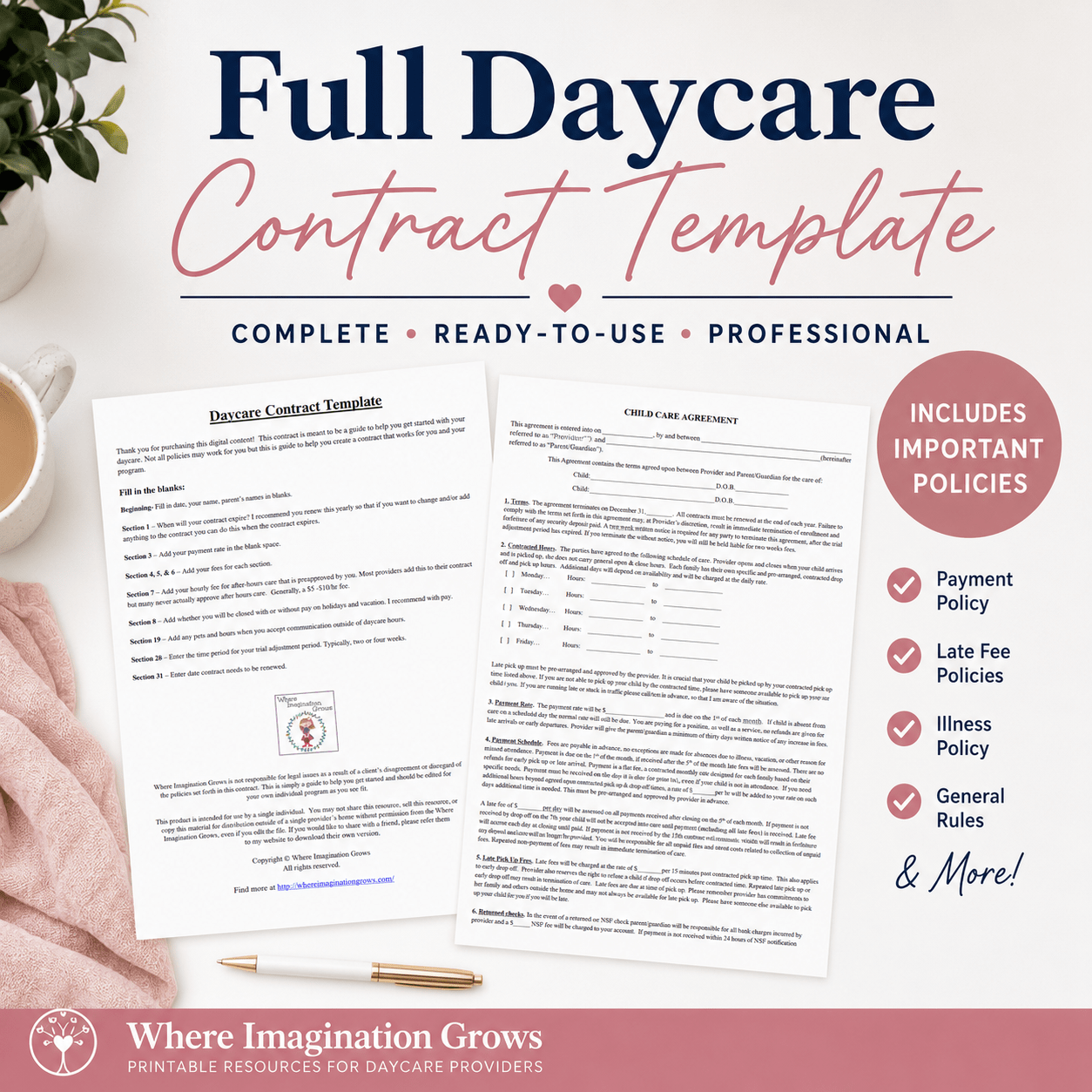
My Home Daycare Contract and Forms Bundle includes practical forms and policies designed to help providers organize their businesses, communicate expectations, and save time.
These resources were created from my experience operating a licensed home daycare and working with daycare families.
View the Home Daycare Forms available in my store.
Frequently Asked Questions About Starting a Home Daycare
Do I need a license to start a home daycare?
Licensing rules vary by state and may also depend on local regulations, the number of children in care, their ages, and whether they are related to you. Contact your state or local child care licensing agency before opening your program.
How much does it cost to start a home daycare?
Startup costs depend on your licensing requirements, the condition of your home, the ages you plan to accept, and the equipment you already own. Common expenses include licensing, insurance, training, safety equipment, furniture, toys, nap equipment, outdoor supplies, and cleaning products.
Can running a home daycare be profitable?
A home daycare can provide a dependable income when enrollment is steady, and tuition covers your business expenses. Profitability depends on your licensed capacity, local tuition rates, operating hours, ages served, food costs, taxes, insurance, supplies, and other expenses.
Can I run a daycare while raising my own children?
Many providers open home daycares so they can remain home with their children. However, your children may count toward your licensed capacity and will need to share your attention and part of their home.
Talk with your family about expectations, private spaces, special belongings, and how daycare will affect everyday family life before you open.
What happens when the provider or the provider’s child is sick?
Your contract should explain when you will close, how parents will be notified, and whether tuition is still due. Your decision may depend on the illness, how contagious it is, your ability to provide safe care, and your licensing requirements.
How do I know what to charge for home daycare?
Research the rates charged by other licensed home daycare programs in your area. Consider the ages you accept, your operating hours, what is included in tuition, your experience, local demand, licensed capacity, business expenses, taxes, and the income you need to earn.
Avoid setting your rates based only on what feels affordable to parents. Your rates need to support a stable and sustainable child care business.
Find Support From Other Home Daycare Providers
Starting or running a home daycare can sometimes feel isolating. Even experienced providers need support, fresh ideas, and reassurance that they are not the only ones dealing with a difficult situation.
Join the Home Daycare Providers Facebook group to ask questions, exchange ideas, and connect with other providers who understand the unique challenges of running a child care program from home.
Find Activities for Your Home Daycare
Do you need crafts, preschool activities, sensory play, learning ideas, or seasonal projects for the children in your care?
Visit the kids’ activities index to find more than 100 hands-on activities organized by age, theme, material, and skill.
Build a Home Daycare That Works for Your Family
Starting a home daycare takes planning, patience, and a willingness to learn as your program grows. You do not need to create a perfect program immediately.
Begin with safety, strong policies, realistic routines, and respectful relationships with families. Review your contract and business practices regularly, make changes when something is not working, and protect the time you need to rest and enjoy your own family.
Those foundations will help you build a home daycare that works for the children in your care, your business, and your life outside daycare.
What do you want to learn more about? Leave me a comment with a topic you are interested in learning more about!
Need crafts and activities to keep your daycare kids busy? Check out our index for 100+ kids’ activities! Find activities by theme, materials, skills, age, and much more!
I ordered your book and a forms. I paid but haven’t gotten download information? Am I missing a step somewhere?
Hi Jessica! I’m sorry that you are having trouble! It should have emailed you the download link immediately when your order was processed. Did you receive an “order complete” email? You should be able to click on the title of each file in your order complete file and it will download. I just resent it to you, but I don’t always trust technology to do what it’s supposed to so if you don’t get it please email me whereimaginationgrows3@gmail.com and I’ll email you a copy of the files.
It occurred to me I hadn’t checked spam yet! It got routed there. 🙁 Sorry for the hassle. I should have thought to check.
Thanks for your help!
Really thanks for sharing this useful post !! This post is very informative and i have got very good information about how to start a daycare. keep sharing !!
This child care agreement template is amazing.. I really didn’t even know where to start to write up a contract. Thank you million times. Really saved me.
Hello,
I am wondering if there is any specific insurance that is required for an in home daycare? Thanks for all the helpful info!
Hi Amanda! It is highly recommended that you have liability insurance to cover any incidents that could occur. Generally, homeowner’s insurance policies will not cover the daycare or anything that happens as a result of the daycare. Here is a good article on the importance of liability insurance.
There are several companies that you can check in with, coverage varies by state and needs so you’d have to get a quote based on your specific needs. Here is a list of companies that provide daycare insurance. I also know that some larger companies, like State Farm and American Family, sometimes offer additional liability insurance for daycare.
In my home daycare provider’s FB group there have been several discussions about insurance. Sometimes searching these FB groups is a good way to see what others are paying, especially if someone happens to be in the same location. You can join here: https://www.facebook.com/groups/homedaycareproviders/
Hi I am just starting to put together my business plan for my in home daycare. The part I’m struggling with the most is what to do if my own children (school aged) are sick. What do you suggest?
I have read other places that suggest telling the parents and keeping kids separated (obviously) which seems pretty feasible especially since I have a 2 story home and my care center will be in the basement. The parents can then choose to bring their kids or not.
Hi Rebecca! I think it depends on the level of sickness. For minor colds and illnesses, I usually will keep my child separate as best I can (it’s much easier with school-agers) and then let my daycare parents know. As my child has gotten older, if she is able to stay separate all day I don’t always notify parents beforehand and just have business as usual. If it is more serious or something that is highly contagious, I usually will close until my child is better or no longer contagious. I do not give refunds for sick days (mine or theirs), but a lot of providers do offer discounts if they close or have a certain number of sick days they are allowed to take in their contract.