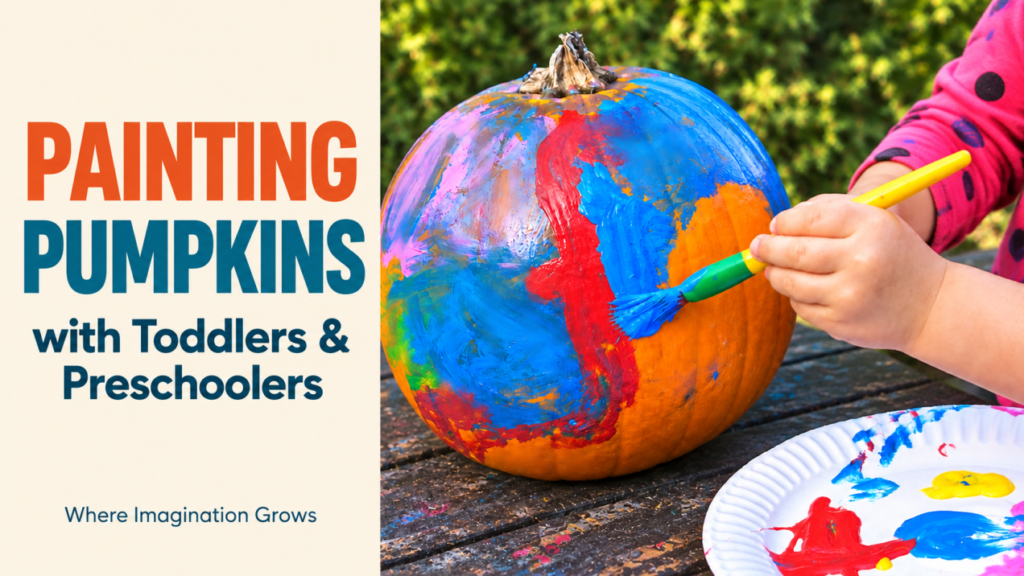
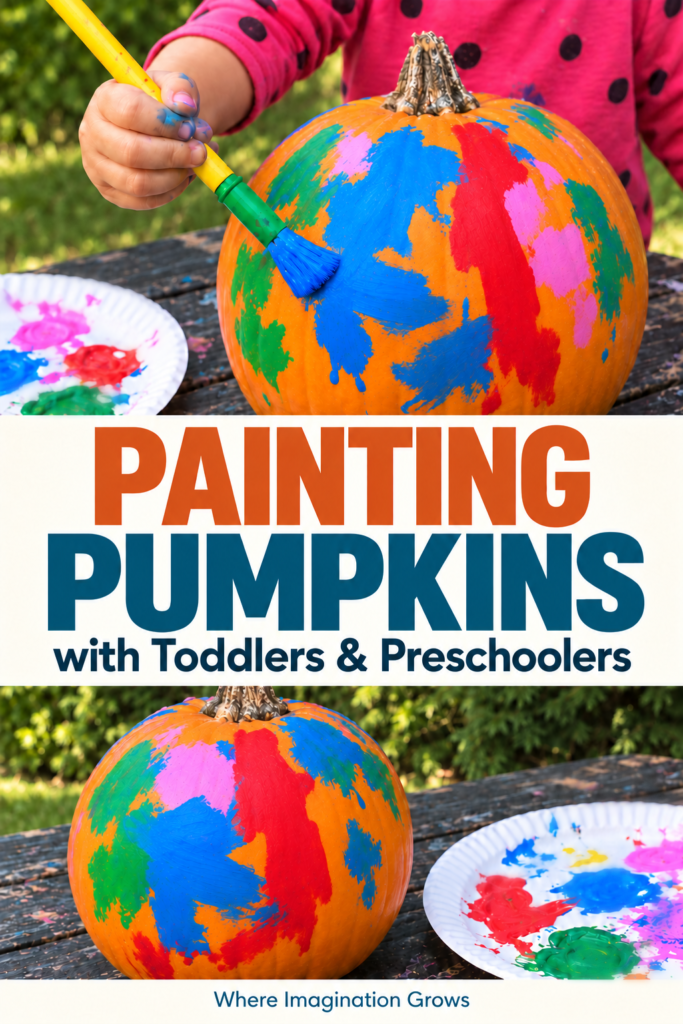
Painting pumpkins is an easy fall art activity for toddlers and preschoolers. There’s no carving, and children can decorate a real pumpkin in whatever way they choose. In my home daycare, even the youngest children enjoy watching their brushstrokes appear on the bright orange surface.
Painting Pumpkins with Toddlers and Preschoolers
We often paint pumpkins after a visit to the pumpkin patch. If the pumpkins come home covered in dirt, we turn cleaning them into another activity with our pumpkin washing sensory bin. Once they’re clean and dry, we bring out the paint.
This activity can get messy, especially when children try to turn their pumpkins to reach every side. I usually set it up outdoors, but a covered table works indoors, too.
Supplies for Painting Pumpkins
You only need a few materials:
- Small pumpkins
- Paint appropriate for the children’s ages
- Paintbrushes
- Paint smocks or old shirts
- Newspaper or a washable covering for the table
Small pumpkins give each child a manageable space to paint. Children can decorate their own pumpkin, which also makes it easy to display everyone’s finished work.
If you’re painting with a group, set out the pumpkins and cover the work area before bringing out the paint. I’ve learned that once the children see the brushes and colors, they’re ready to start!
How to Paint Pumpkins with Kids
1. Clean and dry the pumpkins
Brush off any dirt before you begin. Washing pumpkins can be part of the fun, our pumpkin washing sensory bin is a favorite fall activity in my home daycare. Let the pumpkins dry before painting them.
2. Prepare for messy art
We usually do this activity at our outdoor art station. If you’re working inside, cover a large table and leave enough room for children to move their pumpkins around.
Paint smocks help, but I still plan on washing a few painted hands afterward. Toddlers often want to hold the pumpkin steady while they paint it!
3. Let children choose their colors
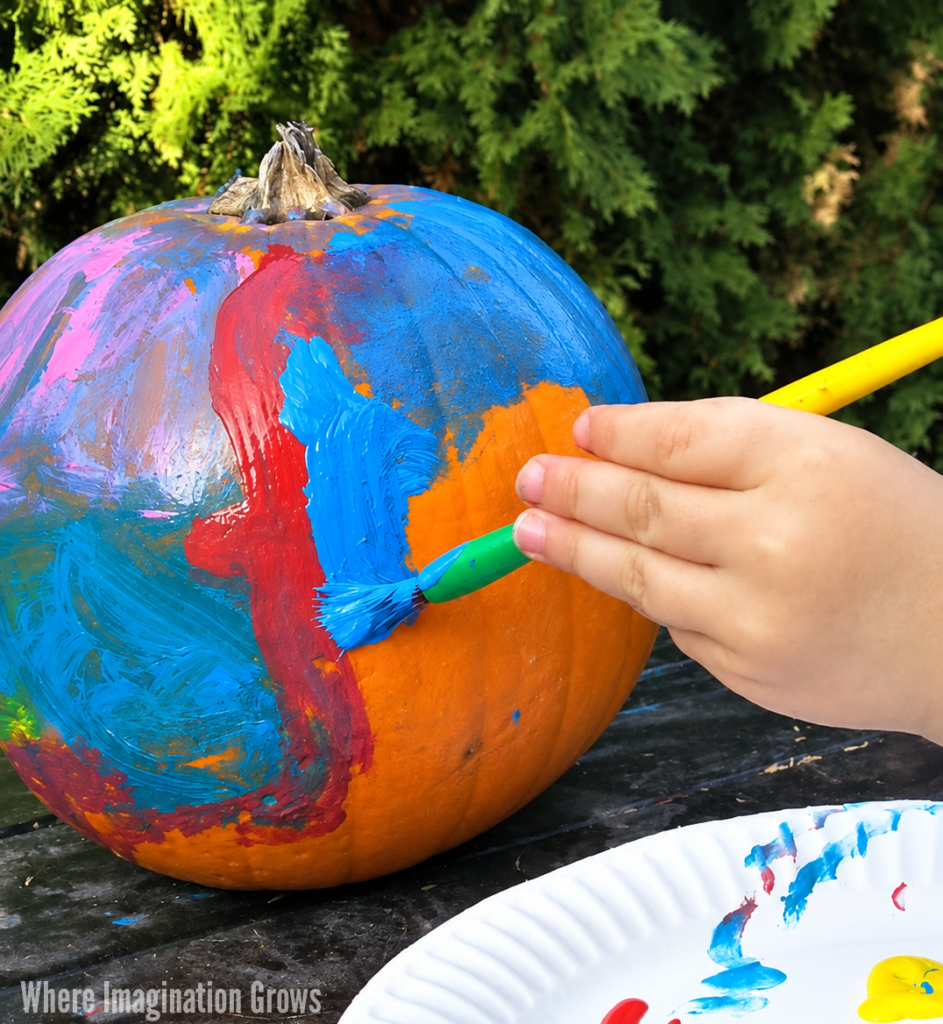
Offer a few colors and give each child a brush. There’s no pattern they need to follow. Some children paint small patches, while others work until they’ve covered nearly the whole pumpkin.
If a child has trouble reaching a spot, help turn the pumpkin. Otherwise, let them decide where the paint goes. The different ways children approach the same activity are part of what makes their pumpkins so fun to display.
4. Find a place for the pumpkins to dry
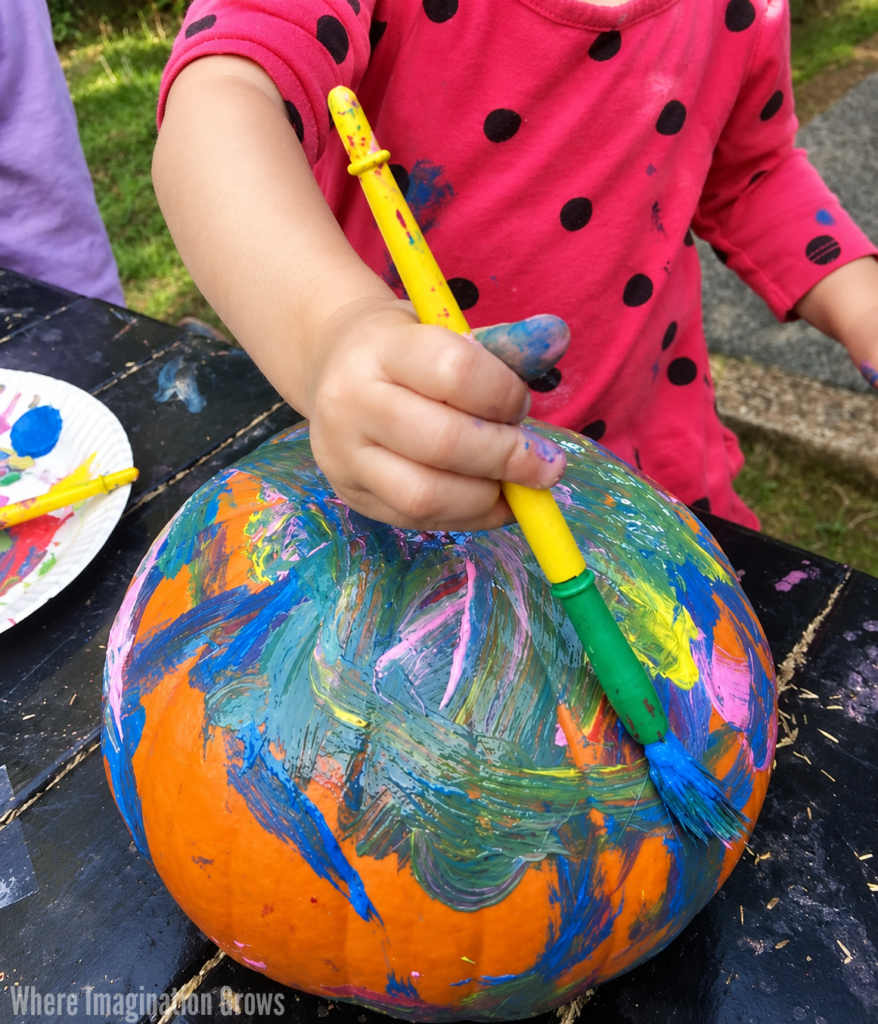
Move the finished pumpkins to a spot where they can sit undisturbed. Once dry, they make cheerful fall decorations. We’ve used ours as table decorations for our home daycare Thanksgiving feast.
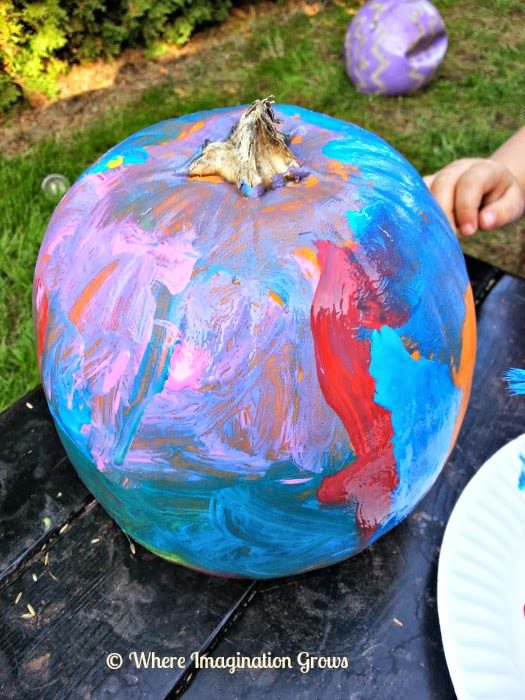
What Paint Should You Use on Pumpkins?
I often use tempera paint with younger children. It’s useful for the painting experience, although I’ve found that tempera and finger paint can dry and flake off pumpkins later. If children want to pick up and move their finished pumpkins often, that’s something to keep in mind.
With older children, I usually use acrylic paint because it has stayed on our pumpkins better. Acrylic paint can be harder to get out of clothing, so I bring out the paint smocks when we use it.
Choose paint that’s appropriate for the children participating, and supervise infants and young toddlers closely if they’re still likely to put brushes or painted hands in their mouths. For the youngest children, the goal can simply be exploring the brush and paint with an adult nearby.
Pumpkin Painting Ideas for Different Ages
One reason I return to this activity each fall is that children of different ages can take part in their own way.
Infants and young toddlers can explore making marks with help and close supervision. They may only paint a small area before they’re ready to move on, and that’s enough.
Older toddlers often want to cover the pumpkin. They may need help turning it, but they can choose their own colors and decide where to paint.
Preschoolers may spend longer decorating. You can invite them to predict what will happen when two colors overlap, then let them try it on their pumpkin.
Older children who don’t enjoy carving can paint a pumpkin alongside the younger kids. My daughter didn’t like the feel of pumpkin guts when she was little, so painting gave her another way to join in.
There’s no need for everyone’s pumpkin to look alike. A few brushstrokes can be just as meaningful to a young child as a carefully planned design.
Try Color Mixing While You Paint
Painting pumpkins gives children a chance to notice what happens when colors meet. My toddlers have pointed out that their paint changed color as they brushed one color over another.
With preschoolers, I like to ask, “What do you think will happen if you add this color?” Then we watch to see what they discover. It’s a simple conversation to have while they’re already focused on painting.
You can also talk about how the pumpkin feels, which parts are still orange, and how they might reach the other side. Follow the children’s interest rather than turning the activity into a lesson they have to finish.
Tips for Painting Pumpkins with a Group
Painting pumpkins is simple to set up in a home daycare or preschool, but a little planning makes the messy part easier:
- Cover more of the table than you think you need. Children will turn their pumpkins and move their brushes around.
- Leave space between painters. Each child needs room to work on all sides of a pumpkin.
- Keep smocks handy. Even children who begin carefully may end up with paint on their sleeves.
- Choose a drying spot ahead of time. You’ll need somewhere to put the pumpkins as children finish at different times.
- Let children stop when they’re done. Some will paint for a long time; others will be happy after a few strokes.
If you can take this activity outdoors, cleanup is easier. Our outdoor art station is where we usually paint our pumpkins.
Frequently Asked Questions About Painting Pumpkins
Do pumpkins need to be washed before painting?
If a pumpkin has dirt on it, clean it before painting. We often let the children help by washing pumpkins as a separate sensory activity. Make sure the pumpkins are dry when it’s time to paint.
Can toddlers paint real pumpkins?
Yes. Small pumpkins work well for toddlers because they can paint directly on the pumpkin and see their colors appear right away. Set up a covered work area, choose paint suited to their age, and stay close to help when needed.
Why is the paint flaking off our pumpkin?
In my experience, finger paint and tempera paint sometimes dry and flake off pumpkins. I still use tempera with younger children when the painting experience is the main goal. For older children who want their decorations to hold up better, I’ve had better results with acrylic paint.
Is pumpkin painting only a Halloween activity?
Not at all. We paint pumpkins as a fall art activity and have displayed the finished pumpkins through Thanksgiving. Children can use any colors they like.
More Pumpkin Activities for Toddlers and Preschoolers
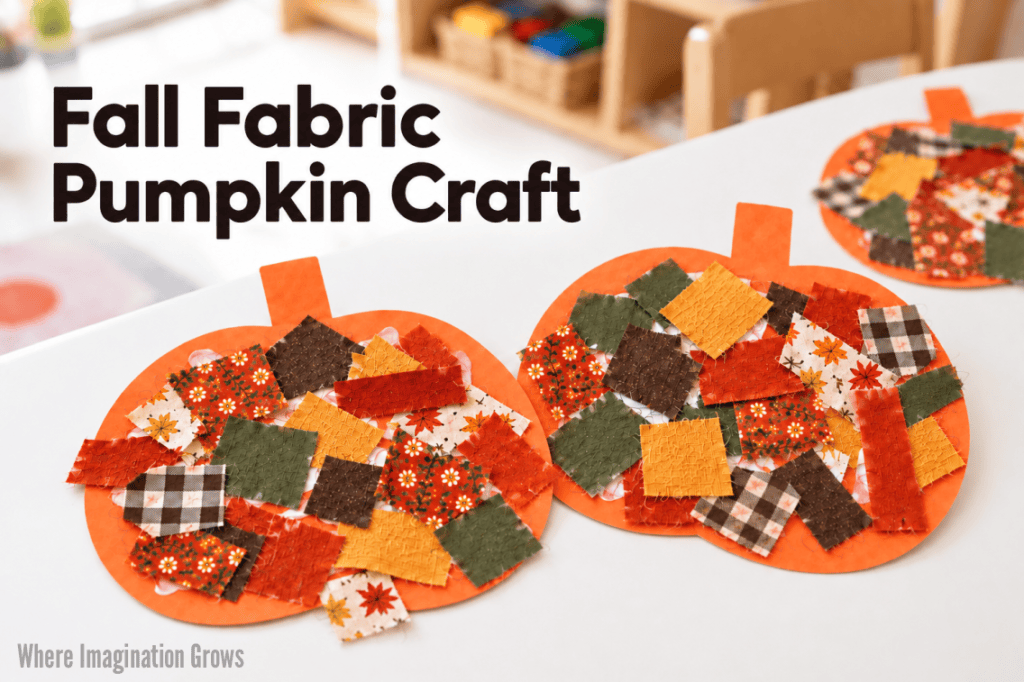
If your children enjoyed painting pumpkins, try washing them first in a pumpkin sensory bin. On another day, you can make fabric pumpkin collages for a different kind of fall art.
Painting pumpkins remains one of our favorite ways to use the pumpkins we bring home from the patch. The children enjoy creating them, and I love seeing all their different colors together when they’re finished.
Looking for more crafts and activities? Check out our index for 100+ kids’ activities! Find activities by theme, materials, skills, age, and much more!