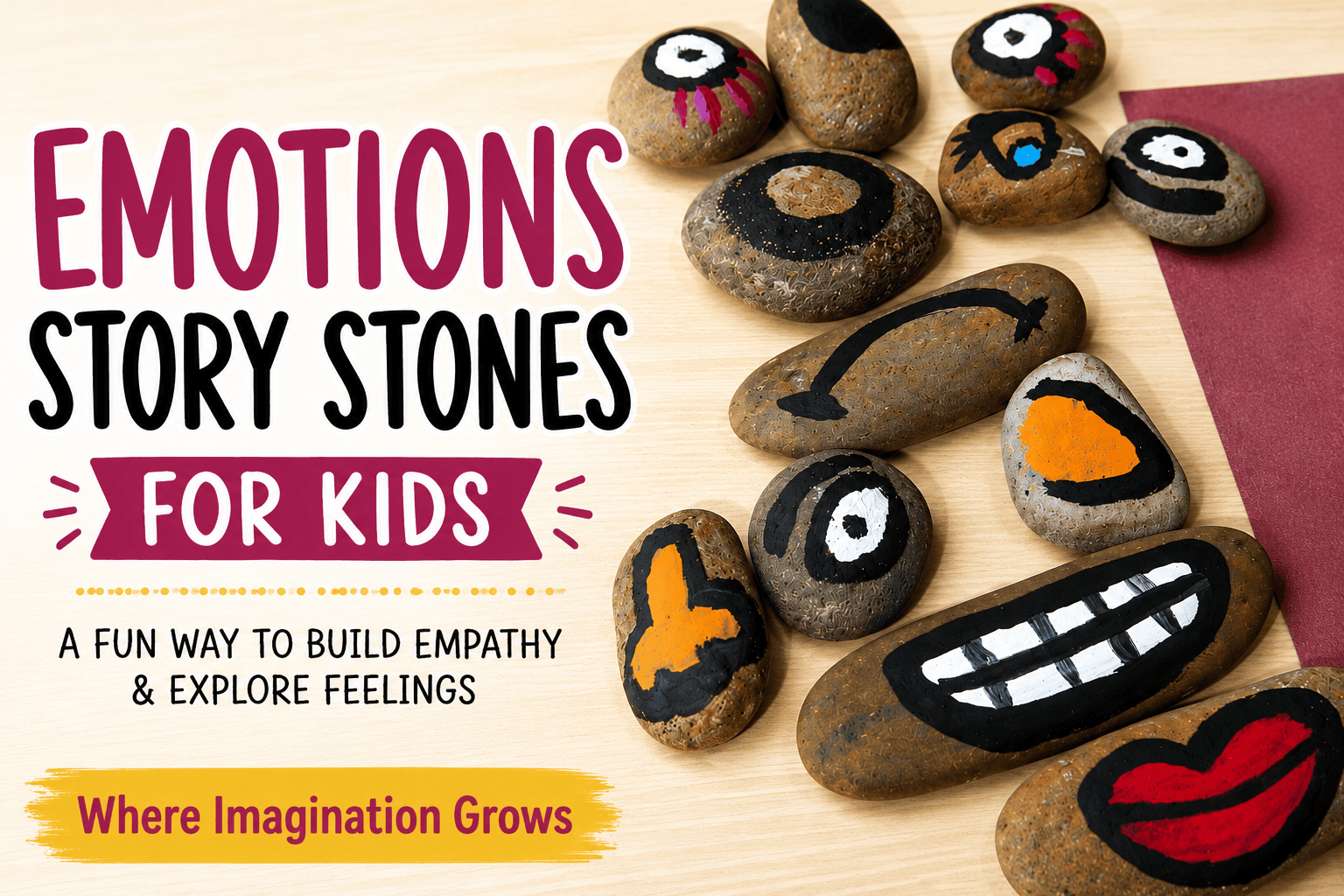
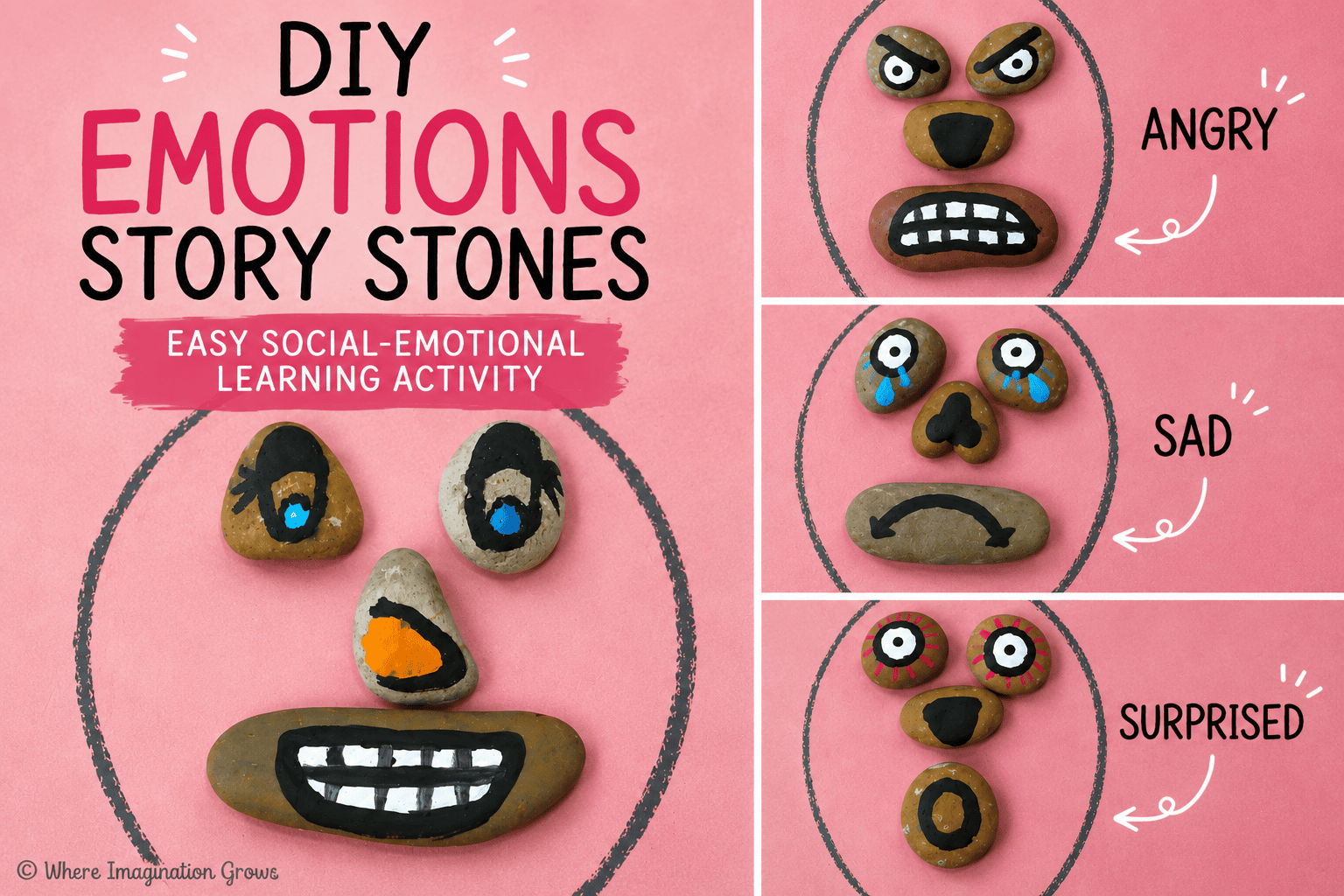
Helping children understand and express their emotions is an important part of early childhood development. One fun and engaging way to encourage these conversations is with DIY emotions story stones. These painted rocks feature different facial expressions and emotions that children can mix and match to create faces, tell stories, and explore how people feel.
Whether you’re a parent, preschool teacher, homeschooler, or home daycare provider, this simple craft encourages creativity while building important social-emotional skills.
DIY Emotions Story Stones: A Simple Social-Emotional Learning Activity
Why You’ll Love This Activity
- Encourages social-emotional learning (SEL)
- Helps children recognize and name emotions
- Promotes storytelling and imaginative play
- Strengthens communication skills
- Easy to make with inexpensive supplies
- Perfect for preschoolers and kindergarteners
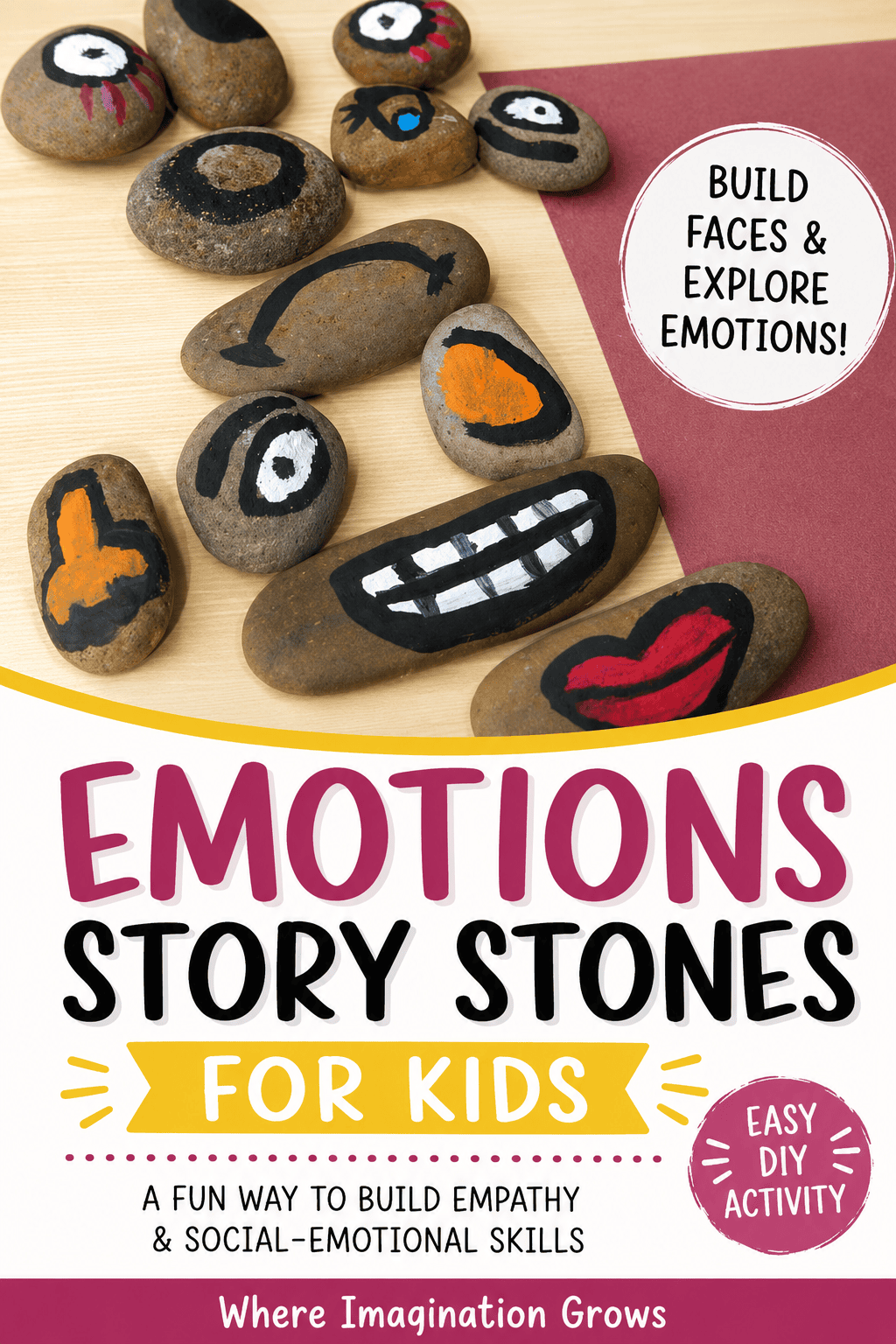
What Are Emotions Story Stones?
Story stones are smooth rocks painted with pictures that children use during open-ended play. Instead of having a fixed purpose, they encourage children to create their own stories and conversations.
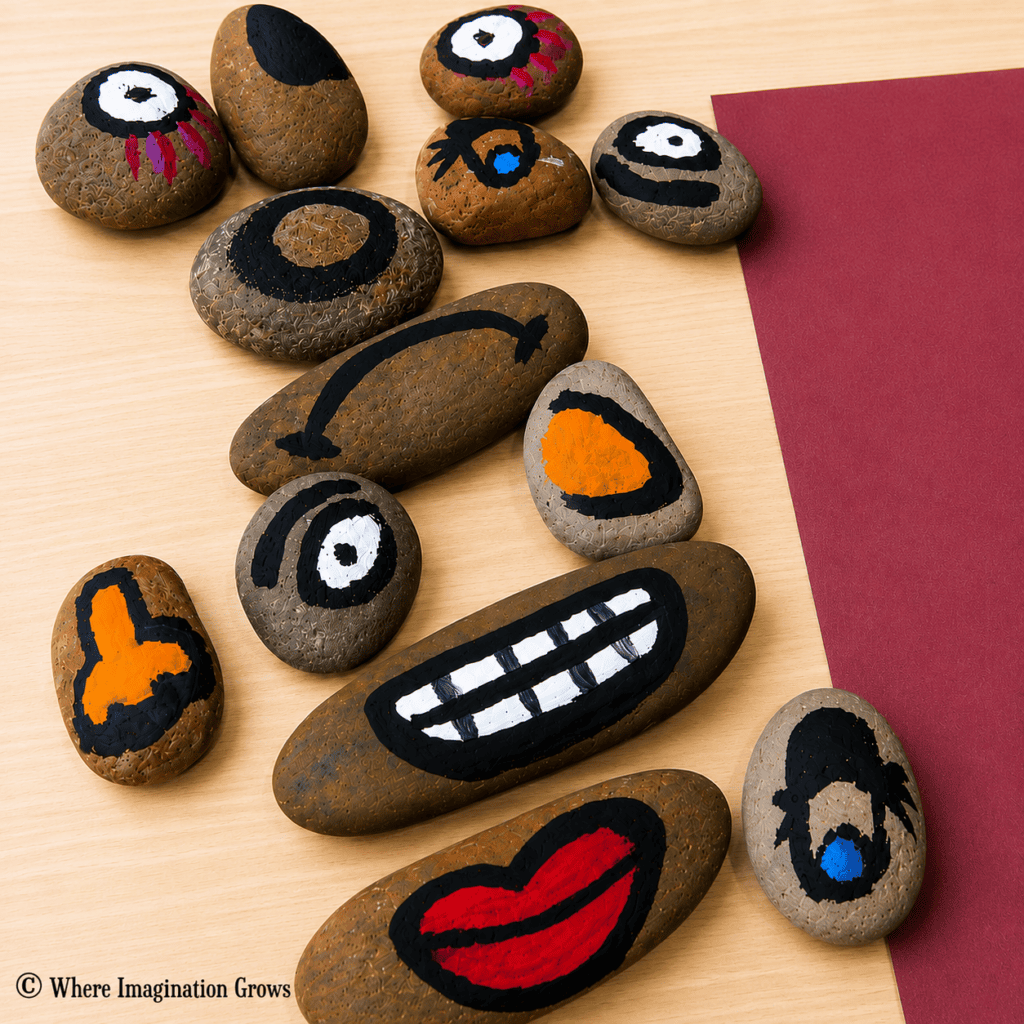
These emotions story stones include different eyes, noses, and mouths that can be arranged to create a variety of facial expressions. Children can build happy, sad, surprised, worried, angry, silly, or excited faces while discussing what each expression might mean.
Because every child interprets the faces differently, no two play sessions are ever exactly the same.
Benefits of Emotions Story Stones
Activities like this do much more than keep children entertained. They help develop valuable lifelong skills.
Emotional Recognition
Children learn to identify facial expressions and connect them to different emotions.
Builds Emotional Vocabulary
Talking about feelings introduces words like:
- Happy
- Sad
- Angry
- Nervous
- Excited
- Proud
- Frustrated
- Surprised
- Worried
The more children hear and use these words, the easier it becomes for them to express how they feel.
Encourages Empathy
As children create different faces, they naturally begin asking questions like:
“Why is this person sad?”
“What happened to make them angry?”
These conversations help children understand that everyone experiences emotions differently.
Develops Language Skills
Story stones encourage children to describe what they see, explain their thinking, and create imaginative stories.
Supports Fine Motor Development
Picking up, arranging, and moving the stones helps strengthen the small muscles in children’s hands.
Supplies You’ll Need
- Smooth river rocks
- Acrylic paint
- Small paintbrushes
- Black paint marker (optional)
- Clear acrylic sealer (optional)
- Construction paper
- Marker for drawing a face outline
How to Make Emotions Story Stones
Step 1
Wash and dry your rocks thoroughly.
Step 2
Choose rocks of different sizes for eyes, noses, mouths, eyebrows, and other facial features.
Step 3
Paint each stone with a different facial feature.
Create a variety of:
- Smiling mouths
- Frowns
- Wide eyes
- Sleepy eyes
- Angry eyebrows
- Silly noses
Step 4
Allow the paint to dry completely.
Step 5
Seal the rocks with a clear acrylic sealer if they’ll be used frequently.
Step 6
Draw a large face outline on construction paper and invite children to build different facial expressions.
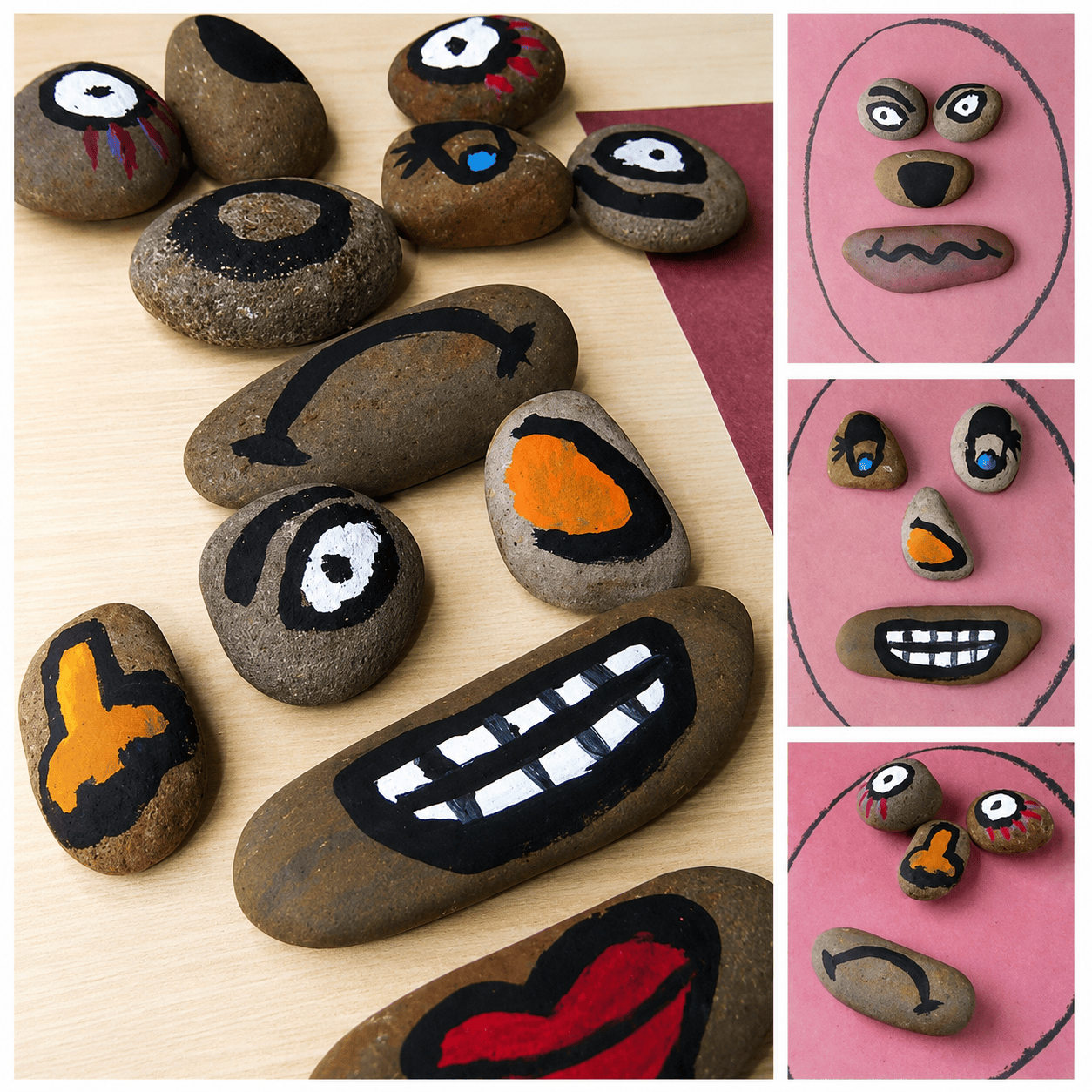
Ways to Play with Emotions Story Stones
Once your story stones are finished, there are countless ways children can use them.
Build Different Emotions
Challenge children to create faces showing:
- Happy
- Sad
- Angry
- Excited
- Scared
- Sleepy
- Silly
- Confused
Guess the Feeling
One child creates a face while another guesses the emotion.
Ask:
- What clues helped you decide?
- Which facial feature gave it away?
- Tell a Story
After making a face, ask children to create a story.
Questions might include:
- What happened?
- Why do they feel this way?
- What might happen next?
- How could someone help them?
Mirror the Expression
Children recreate the face using their own expressions in a mirror.
This helps connect facial movements with emotions.
Solve Everyday Problems
Create a face and ask:
- What could make this person smile?
- How would you help someone who feels worried?
- What would you do if your friend looked like this?
- Questions to Encourage Conversation
Use open-ended questions to extend learning.
- How do you think this person feels?
- Why might they feel that way?
- Have you ever felt like this?
- What happened?
- What helps you feel better?
- How can you help a friend who feels sad?
- Can someone have more than one feeling at a time?
These discussions help children develop emotional awareness and empathy while practicing communication skills.
Frequently Asked Questions
What age are emotions story stones best for?
Emotions story stones are ideal for children ages 3–8, but older children can also enjoy using them for storytelling, creative writing, and social-emotional learning activities.
Can I use real rocks?
Absolutely! Smooth river rocks are durable, inexpensive, and easy to paint, making them perfect for this project.
What kind of paint works best?
Acrylic craft paint provides bright colors and excellent coverage. Paint markers can also be used to add smaller details.
Should I seal the rocks?
If the story stones will be used regularly in a classroom or home daycare, applying a clear acrylic sealer will help protect the paint and make the stones last longer.
Final Thoughts
These DIY emotions story stones are a simple, inexpensive craft that can provide years of meaningful play. As children build faces, tell stories, and talk about emotions, they’re developing valuable communication and social-emotional skills they’ll use throughout their lives.
Whether you use them in a preschool classroom, homeschool, or home daycare, this hands-on activity is a wonderful way to encourage empathy, imagination, and emotional confidence.
Have you made your own emotions story stones? I’d love to hear how you use them! Leave a comment below and share your favorite ways to encourage conversations about feelings with young children.
More Social-Emotional Learning Activities:
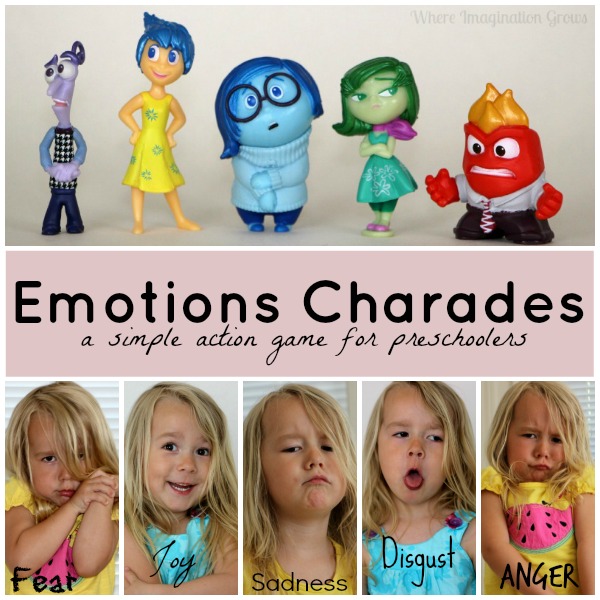
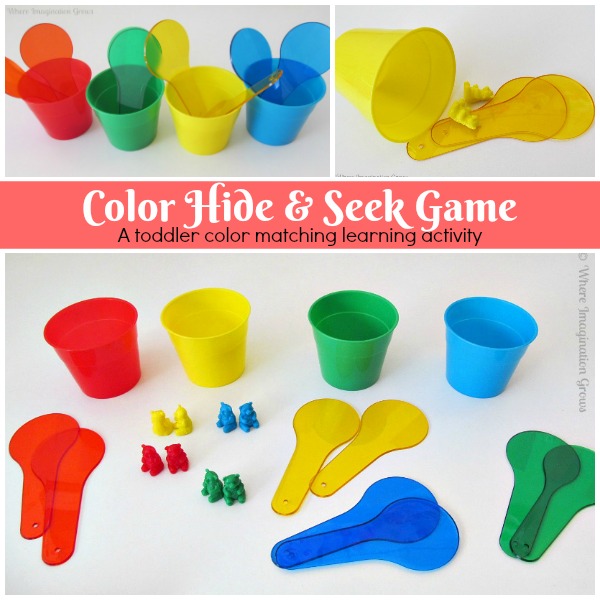
If your children enjoyed these emotions story stones, they may also enjoy other hands-on activities that encourage emotional growth, storytelling, and imaginative play.
Be sure to explore more preschool crafts and pretend play ideas, as well as our social-emotional learning ideas here on Where Imagination Grows.
Post contains affiliate links for your convenience; see my disclosure for more.
Looking for more crafts and activities? Check out our index for 100+ kids activities! Find activities by theme, materials, skills, age, and much more!
What a playful way to discuss emotions! If we hope to raise empathetic and caring children, then our kids need to be literate in emotional intelligence as much as any other form of intellect. How wonderful that this helped your daughter differentiate between surprised and scared! Sharing on FB today 🙂
This is AWESOME! Pinned. 🙂
Thanks Leslie! 🙂
I love this idea! I have a flannel board story that uses a variety of eyes, eyebrows, mouths (and even blushing cheeks). I like your version because it is very durable. Nicely done!
What wonderful activity for talking about feelings.
This is so creative and cute!!
I am pinning this now!
Thank you for stopping by the Thoughtful Spot Weekly Blog Hop this week. We hope to see you drop by our neck of the woods next week!
This is great! I am a retired special ed. teacher, now working as a consultant/interventionist for the school system and independently. I work with a lot of Autistic children on social skills. This is perfect to work with them. Thank you.
I have tried to pin it, but it is not cooperating.
These are such a great idea! Love them! Thanks for linking up to Tuesday Tots. I’ve featured this idea this week 🙂
I truly love this idea! We’ve been trying to lean towards the Reggio Emilia approach at our early childhood facility & I think this is a great way for our two year old’s to help decipher their emotions! Thanks so much for sharing!
This is such a cute idea! I love it! Pinning and sharing!
I love this idea 🙂 pour les préscolaire
Merci :0)
How fun! What a smart idea